
Ever wonder the history of River Dance!
Posted: January 22, 2011 Filed under: Apso Aficionados 1 CommentJump Edie Jump
Posted: January 21, 2011 Filed under: FFT Lhasa Apsos 1 CommentLori, our agility instructor from All Dogs Training, took this photo of Edie several weeks ago. The wind was blowing really hard. All the dogs were distracted. May have had something to do with the agility field being between two horse farms!

Native Stock Committee
Posted: January 20, 2011 Filed under: Lotsa Lhasa Info | Tags: Gompa Lhasa Apso 1 CommentThis past week American Lhasa Apso Club members should have received a voting packet. Ballots must be postmarked by March 5th. So….by the Ides of March I will know the results. This represents the past several years as ALAC Native Stock Committee Chair and nearly a decade of my work with the Gompa dogs. You can learn the details here.

Mexican lion…
Posted: January 19, 2011 Filed under: Lotsa Lhasa Info Leave a comment
This is the true story of a Garage Owner in the Southwest
(New Mexico)
| He was sick and tired of thugs breaking into his garage shop to steal tools, etc. So he came up with this idea. He put the word out that he had a new Mexican Lion that would attack anyone that would break in or climb his fence. Would-be thieves saw the “Lion” from a distance and fled the scene.
|


So many stories of dogs in Tibet..
Posted: January 18, 2011 Filed under: Apso Aficionados Leave a commentKathy shared:
Deb, I Googled: Dogs in Tibet and there are dozens and dozens of images…clicking on a photo will reveal who took the photo and it’s location/ownership–copyright…
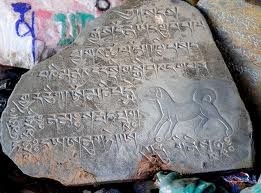
the Mani Stone truly caught my attention.
Wiki Definition: Mani stones are stone plates, rocks and/or pebbles, inscribed with the six syllabled mantra of Avalokiteshvara[1] (Om mani padme hum, hence the name “Mani stone”), as a form of prayer in Tibetan Buddhism. The term Mani stone may also be used in a loose sense to refer to stones on which any mantra or devotional designs (such as ashtamangala) are inscribed. Mani stones are intentionally placed along the roadsides and rivers[1] or placed together to form mounds[1] or cairns[2] or sometimes long walls, as an offering to spirits of place or genius loci. Creating and carving mani stones as devotional or intentional process art is a traditional sadhana of piety to yidam. Mani stones are a form of devotionalcintamani.
This stone appears to tell a story about a Tibetan Mastiff…
A young monk with apso

Even the dogs join their family in prayer

 Kunza at FleetFire Timbers